
Total Solar Eclipse
27 February 2026
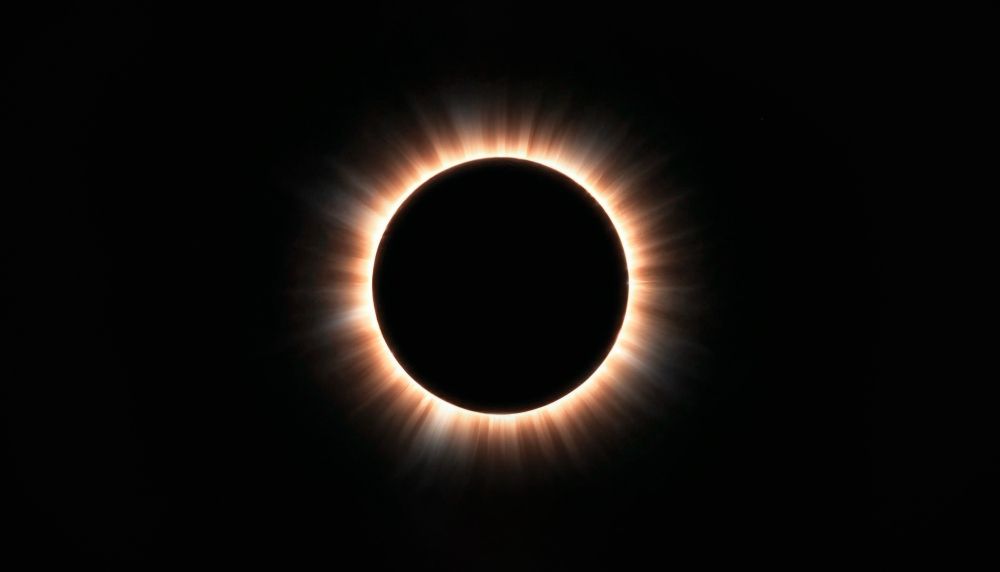
A solar eclipse occurs when the Moon positions itself between the Earth and our star. Since the Moon is considerably smaller than the Earth, its shadow can never cover the Sun across our entire planet's surface, but only in a small area. As the Moon moves around the Earth, its shadow shifts across the surface and determines a narrow, elongated band through which that shadow passes. If, moreover, due to the Moon's distance, it manages to completely cover the Sun, then we have a total solar eclipse in that band.

A total solar eclipse is a highly spectacular and rare occurrence that attracts massive public and media attention.
In fact, the last total eclipses in Castellón occurred in 1860 and 1905—that is, more than a century has passed since we last enjoyed a total eclipse from our location. And it won't be until the next century that we experience another total eclipse in Castellón. We've been fortunate, as on average they repeat every more than 300 years.
Although the totality band or path of this eclipse will touch Greenland and a small part of Iceland, it is considered the "Great Spanish Eclipse," because due to visibility circumstances, our country can be considered the only fortunate nation on this occasion for its observation.
The provinces crossed by the totality band extend from Galicia to the Valencian Community. Our city is located almost at the center of the totality band (Alcocebre is the exact location where the center passes) and presents clear advantages compared to other locations, such as communications, hotel infrastructure, experience in organizing large-scale events, and the commitment of the Honorable City Council to make it an unforgettable event.

A total solar eclipse typically lasts around 2 hours from when the Moon begins to cover the Sun until it completely separates. Totality, by contrast, is a matter of minutes, with a maximum of 7 minutes in exceptionally long eclipses. In the eclipse of August 12, 2026, totality at the location of maximum eclipse reaches 2 minutes and 18 seconds off Iceland's coasts, while in our location it drops to 1 and a half minutes.
Since the Moon is approximately 400 times closer to the Earth than the Sun and is also roughly 400 times smaller than it, both present nearly the same apparent size in the sky. However, depending on the point in its orbit where the Moon finds itself, it can appear slightly larger or smaller. If it appears larger and completely covers the Sun, a total eclipse occurs; if it appears smaller and doesn't completely cover it, leaving a ring of light around it, an annular eclipse occurs.
During totality, an asymmetrical silvery corona appears around the two aligned celestial bodies—the highest parts of the asymmetrical solar atmosphere. The brightest planets and stars typical of the onset of nightfall appear, the ambient temperature changes rapidly, and even the wind regime changes; animals alter their habits as if night had suddenly surprised them... In short, we are before an atmosphere of strangeness more pronounced the more open the environment from which we observe.

Its brief duration, how extraordinary it is to witness one, and all the elements that surround and change during the course of the event make it an unforgettable experience, regardless of our interest in the heavenly bodies.
OBSERVING THE ECLIPSE
Observation Safety
Naked-eye observation
The beginning of partiality will only be visible with proper protection using certified filters, as solar observation, especially with optical means without adequate protection, can cause irreversible damage to the observer's eye.
Only during the moments of totality can you observe without any protection, as the Sun is completely covered by the Moon.
However, since the exact superposition of the celestial bodies occurs at a specific instant, you MUST NOT observe with the naked eye without protection (and much less with optical means without protection) until this phase begins.
Similarly, it is important to put on protective filters two or three seconds before the superposition of both celestial bodies ends—that is, before the Sun illuminates us again. Therefore, it's advisable to set an alarm on a clock or smartphone to sound just before totality ends, as the emotion of the moment may distract us.
It's important to note here that, according to the Scientific and Advisory Commission of the Eclipse Trio, previously known as the National Eclipse Commission, an organization that brings together government institutions and research and science centers from across our country, popular eclipse glasses must comply with the EN ISO 12312-2:2015 standard.
Likewise, if they have been acquired and manufactured in the European Community, the CE labeling is important, which, except in cases of counterfeiting, usually provides additional quality assurance (and should be distinguished from China Export, which is very similar in appearance). Our best recommendation is to purchase them from reputable stores or institutions that will have applied appropriate criteria when acquiring them from distributors.
Even so, with these glasses, typically made of a polymer mounted on cardboard, it is advisable not to continuously look at the partiality for more than two or three minutes.
During partiality, simple, safe, and inexpensive experiments can be conducted, such as observing the projection of the Sun on a wall or white sheet (preferably located in shadow) resulting from a small hole in another sheet, or a kitchen utensil that contains them (such as a skimmer) positioned in front of it.

Observation with Optical Instruments
If observation will be conducted with telephoto lenses, binoculars, or telescopes, the quality of the filters should concern us even more. Moreover, their placement must always be in front, and previously, you must ensure their good condition and correct, firm placement. If you plan to acquire them for this event, the same criteria we mentioned in the case of eclipse glasses should be applied.
Alternatives such as welder's glass (with densities greater than 13 always) or stacked photographic polymers are never advisable, as their qualities or filtering capabilities are highly questionable.
If observation will be conducted using a telescope employing the projection method (never looking through the eyepiece at any time), it is important that you know that the lenses can suffer significant damage, especially in the doublets of refractor telescopes. Furthermore, in this case, you will never locate the Sun's position using a normal finder lacking a filter, as this attempt alone can quickly damage your eye. In this type of observation, we must pay very special attention to the presence of minors who, in a moment of carelessness, might be tempted to put their eye to the eyepiece.
Where to Observe It?
The Observation Site
The exact location chosen to observe the astronomical phenomenon is a very delicate and important decision.
The height of the Sun will be low on the western horizon, regardless of where we find ourselves in Spanish geography, ranging between 12 degrees in Galicia and 2 degrees in the Balearic Islands. It is very important to consider the statistical average of cloud presence, the worst enemies of eclipses.
In this regard, the information graphics offered by the IGN and the sadly deceased NASA astrophysicist Fred Espenak are worth highlighting. No place can guarantee observation of the phenomenon due to the absence of clouds; therefore, correctly evaluate all the circumstances of the place you choose based on your needs.

General Recommendations
An event like this should be planned with some advance notice. Not only regarding how we will observe it, but also from where and at what time we will arrive there.
Experience in observing these phenomena allows us to say that they are massively followed events, not only by national tourism from the area where they occur, but far beyond and also internationally.
The easier the access communications and the more favorable the dates (such as summer, weekends, holidays), the greater the attendance. Given the dates on which it occurs, it will provoke an exodus of visitors from neighboring Spanish provinces (where it is only visible as partial and bears no resemblance to the spectacle of totality), as well as Europeans, Americans, and Japanese, with the latter two countries noted as major generators of eclipse-chasing tourism.
The only truly valid advice is to ensure you arrive at your chosen observation location several hours in advance (or, better yet, days before). It is also important to stay informed about possible traffic or public transportation incidents that may affect access to your chosen exact point. Additionally, it is advisable to bring water, some food, sunscreen, a sun hat, and a fully charged phone.
EC2026 in Castellón
Location
The provinces crossed by the totality band extend from Galicia to the Valencian Community. Our city is located almost at the center of the totality band.
Castellón de la Plana is situated squarely in the Mediterranean corridor, so it has fast, modern, comfortable, and easy access both from the South and from the North—much less prone to collapse than other towns or municipalities with secondary roads or multiple stretches of different categories, which complicate reaching an appropriate location for observing the astronomical event.

Duration
The times offered at this point are for the city of Castellón and its maritime district. Although calculated by the IGN, it is advisable to allow two or three seconds of margin for proper eye protection. Do not remove the observation filter until the moment of totality and put it back exactly two seconds before totality ends, prior to the diamond ring flash.
The initial partiality phase begins with what is called first contact. Without protective filters, and besides the fact that we should not look at the Sun, we perceive absolutely nothing.
Data for the city of Castellón and Maritime District:
First contact: 19:37:26 hours
Totality begins: 20:31:14 hours
Totality ends: 20:32:47 hours
Partiality ends: invisible, the Sun sets at: 21:00:55
At the moment of totality (maximum eclipse), the Sun is at a height of 4.5 degrees and at an azimuth of 286 degrees (basically toward the west).

Sun Height
At the moment of totality, the climactic and most spectacular point of the phenomenon (when night will suddenly fall), which will occur at 20:31, the Sun will be at only 4.5 degrees of height above the Western horizon in Castellón de la Plana. This is going to make it somewhat complicated to find an especially appropriate location.
Observers of the astronomical event, especially those planning long journeys on Spanish roads, may wonder if the 8-degree solar height in the town of Burgos (to mention a location, initially with good meteorological prospects) is sufficient reason to choose it over the Mediterranean, with 4.5 degrees.
Both 8 and 4.5 degrees are low degrees above the Western horizon, where the Sun will be during totality. To understand this visually, extend your arm and join your index, middle, and ring fingers parallel to the horizon, clear of obstacles. That height is almost 5 degrees and will be the approximate height of the Sun at the moment of totality in Castellón de la Plana.
Extend your arm again, close your fist with your thumb naturally slightly bent, and position it similarly to the previous case—that is 10 degrees. That will be a greater height than the Sun will have in Burgos and somewhat less than the height in A Coruña.

On the other hand, being low and near the horizon offers extraordinary possibilities. Any astronomical object near the horizon offers us the optical sensation that it is larger—we have verified this sometime in our lives with the sunrise or sunset of the Sun and/or Moon.
This same optical effect will occur with a completely eclipsed Sun. The solar corona can appear magnificent, both due to solar activity and its proximity to the horizon. And this proximity to the horizon will also offer us incredible frames of the eclipsed Sun alongside monuments, palm trees, singular buildings… With good taste, it will be one of the most Instagram-worthy and photogenic eclipses in history. Still, our recommendation is to experience it rather than photograph it.
Public Observation
In Castellón's maritime district (Grao), next to the Mediterranean, we find one of the few planetariums in our country, belonging to the Honorable City Council.

The technical team of the Planetarium has verified that at least from Pinar and Gurugú beaches, the event is visible and that the necessary safety and accessibility conditions are met, so the City Council is prepared to organize a unique event, positioning Castellón de la Plana as one of the best provinces prepared for a historic observation of this total solar eclipse, even offering the possibility of swimming in the warm waters of our Mediterranean Sea under the very shadow of the Moon during the total eclipse.

This attractive proposal has been brought to FITUR 2025 by renowned science communicator Javier Santaolalla (Date un VLOG) and to FITUR 2026 by science communicator Josep Calatayud (Mission Control), both of whom will be present on eclipse day.
Read more
.jpg)
.jpg)